
World Cup 2026 Betting Guide: Odds, Predictions & Tips for Canadian Bettors
 Available in US
Your practical guide to World Cup betting. Current odds, group predictions, team analysis and step-by-step tips for the 2026 tournament.

I placed my first World Cup bet in 2010 — a modest wager on Spain to lift the trophy at roughly 6.50 odds. That single bet taught me more about tournament dynamics, squad depth, and the peculiar logic of World Cup betting than a decade of league football ever could. Now, sixteen years and three World Cups later, I've watched Canada go from spectators to co-hosts, seen betting markets mature from backroom operations to regulated provincial platforms, and developed a framework for approaching this tournament that consistently outperforms gut instinct.
The 2026 FIFA World Cup represents something unprecedented: 48 teams across three nations, 104 matches over 39 days, and a Canadian national team playing all three group stage fixtures on home soil. For bettors in Ontario, British Columbia, Alberta, and beyond, this creates a unique convergence of opportunity. Legal single-event sports betting arrived in Canada only in August 2021 with Bill C-218, meaning this is the first World Cup where Canadians can fully participate in the global betting market through regulated channels.
Throughout this guide, I'll break down exactly how to approach World Cup 2026 betting — from understanding odds formats and identifying value markets to analyzing Canada's Group B opponents and timing your wagers for maximum advantage. Whether you've never placed a soccer bet or you're looking to refine your tournament strategy, the framework here applies. I've spent nine years dissecting CONCACAF coverage and World Cup markets, and everything in this guide reflects what actually works when real money meets tournament football.
What You Need to Know Before Kickoff
- Format shift matters — The expanded 48-team tournament with 12 groups of four changes knockout qualification dynamics entirely. More teams advance, but the Round of 32 creates unpredictable bracket paths.
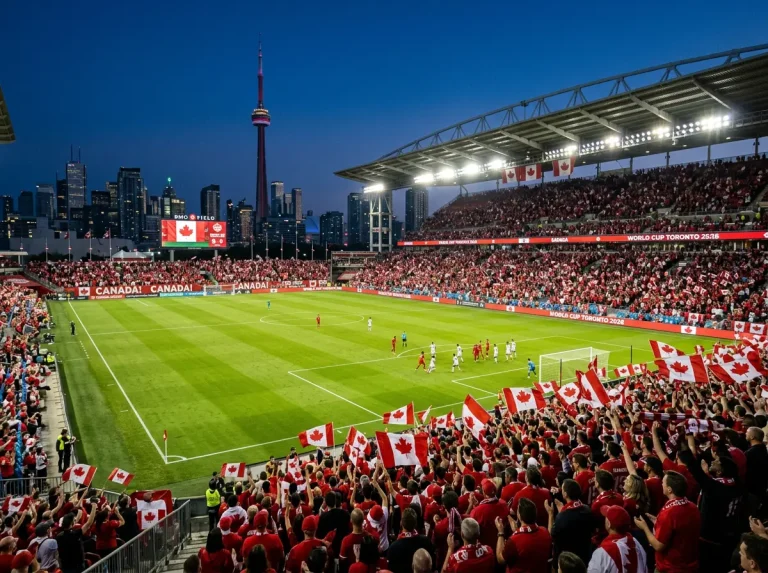
- Canada plays all group matches at home — BMO Field in Toronto hosts the opener against Bosnia and Herzegovina on June 12; BC Place in Vancouver stages the Qatar and Switzerland fixtures. Home advantage is quantifiable and affects odds.
- Decimal odds dominate Canadian sportsbooks — Learn to read them before kickoff. A price of 2.50 means a $100 bet returns $250 total (your stake plus $150 profit).
- Argentina enters as defending champion at compressed odds — The title defence narrative inflates prices. Value often hides in the 8.00 to 15.00 range where France, England, and Brazil sit.
- Ontario offers the widest sportsbook selection — Other provinces rely on provincial platforms (PlayNow in BC, Mise-o-jeu in Quebec). Know your options before the tournament starts.
How to Bet on the World Cup 2026: Step-by-Step

The first bet I ever lost was a three-team parlay on group stage matches where I'd picked all the favourites without checking the odds. The returns were terrible, the variance was high, and I learned immediately that World Cup betting rewards process over impulse. Let me walk you through the process I use now — one that treats each decision as a series of smaller, manageable steps rather than one overwhelming choice.
World Cup betting differs from domestic league wagering in a few critical ways. The sample size is tiny: even with 104 matches across the tournament, each team plays a maximum of seven games. Form fluctuates wildly because squads assemble weeks before kickoff after a full club season. And public sentiment — especially around host nations and defending champions — distorts odds in ways that create opportunities for patient bettors willing to look beyond the obvious.
Pick Your Market
Walking into a World Cup sportsbook without knowing which market you want to bet is like entering a restaurant without checking if they serve the cuisine you're craving — you'll end up with something, but probably not what serves you best. Markets fall into three categories, each with distinct characteristics that suit different betting approaches.
Pre-tournament markets include outright winner, top scorer (Golden Boot), group winners, and team to reach the final. These markets open months before kickoff and typically offer the best value early, when uncertainty is highest. The catch: your money is locked until the relevant outcome resolves, which could be five weeks for an outright bet.
Match markets cover individual games — moneyline (who wins), over/under goals, both teams to score, correct score, and various handicaps. These offer faster resolution and allow you to react to tournament developments, but competition is fiercer and edges smaller.
Proposition markets let you bet on specific events within matches or the tournament: a player to score first, number of corners, cards issued, or whether a match goes to extra time. Props often carry higher margins but can offer value when you spot something the market hasn't priced correctly.
For most bettors, starting with match markets makes sense. You can watch the game, assess your read in real-time, and learn how tournament football differs from what you're used to. For the complete breakdown of every bet type, including when each works best, the dedicated betting guide goes deeper.
Read the Odds (Decimal, American, Fractional)
Canadian sportsbooks default to decimal odds, which makes them the format to master first. The logic is straightforward: the number represents your total return for every dollar wagered, including your original stake. Odds of 3.00 mean a $50 bet returns $150 — your $50 back plus $100 profit. Odds of 1.50 return $75 on that same $50 bet.
The implied probability conversion takes one step: divide 1 by the decimal odds. So 2.00 implies a 50% chance (1 ÷ 2.00 = 0.50). Odds of 4.00 imply 25%. This calculation matters because it lets you compare the bookmaker's assessment against your own view. If you believe Canada has a 40% chance to beat Bosnia and Herzegovina but the odds sit at 3.00 (implying 33%), you've found theoretical value.
American odds appear on some platforms, especially those with US ties. Positive numbers show profit on a $100 stake (+200 means $200 profit on $100 wagered). Negative numbers show how much you must bet to win $100 (-150 means betting $150 to profit $100). I find these clunkier than decimals, but conversion is simple: for positive odds, divide by 100 and add 1; for negative odds, divide 100 by the absolute value and add 1.
Fractional odds — 5/2, 9/4, 11/10 — persist mainly in UK-facing platforms and horse racing. The first number is your profit relative to the second number wagered. At 5/2, a $20 bet profits $50. Unless you're comfortable with mental arithmetic involving fractions, stick to decimals in Canadian markets.
Example: Converting Odds Formats
A sportsbook lists Canada to qualify from Group B at different odds across formats:
Decimal: 1.75
American: -133
Fractional: 3/4
All three represent the same implied probability: 57.1%. A $100 bet returns $175 total in each case — $75 profit plus your $100 stake.
Place Your First Bet
With a market selected and odds understood, the mechanics are simple but worth stating explicitly — particularly for anyone navigating provincial regulations for the first time. I'll keep this practical rather than platform-specific since interfaces change faster than guides can track.
First, confirm you're using a legally operating sportsbook in your province. Ontario residents can access multiple private operators licensed through iGaming Ontario. British Columbia bettors use PlayNow through BCLC; Quebec residents use Mise-o-jeu via Loto-Québec. Alberta's Play Alberta operates provincially, though the province is expected to open to private operators by 2026. Using offshore unlicensed sites remains technically legal for individuals but offers no consumer protections and may violate provincial regulations.
Second, fund your account using a method you're comfortable with. Bank transfers, Interac e-Transfer, debit cards, and various e-wallets work across most platforms. Note that credit card deposits are prohibited or restricted at many Canadian sportsbooks following responsible gambling guidelines.
Third, navigate to the World Cup 2026 section — usually under "Soccer" or "Football" depending on the platform's regional settings. Select your market, confirm the odds haven't shifted since you last checked, enter your stake, and submit. The platform will display potential returns before you confirm.
Fourth, and this part matters: record the bet somewhere. A simple spreadsheet tracking date, match, market, odds, stake, and outcome creates accountability. After fifty bets, you'll have data showing whether your approach works or needs adjustment. Without records, you're gambling on memory, which is unreliable and forgiving in all the wrong ways.
World Cup 2026 Odds Snapshot






I check outright odds every morning during the three months before a World Cup — not because they change dramatically day-to-day, but because the small movements reveal what the sharp money is doing. When Brazil drifted from 6.00 to 7.50 over six weeks earlier this year, that signalled something beyond random fluctuation: squad concerns, coaching changes, or a shift in market sentiment worth investigating. Odds aren't just prices; they're real-time intelligence.
As of April 2026, the complete odds breakdown shows the market's hierarchy clearly. But here's a snapshot of where things stand across the main futures markets — outright winner, Golden Boot, and group winners — before we dig into the specific numbers.
Outright Winner
Argentina enters the tournament as defending champion at roughly 5.50, making them the outright favourite but not by the margin you'd expect for a team that won in Qatar. The market remembers that back-to-back World Cup winners haven't existed since Brazil in 1958 and 1962, and that ageing squads historically struggle with the physical demands of tournament football in a third consecutive summer.
France sits second at approximately 7.00, reflecting both their depth and their 2022 final appearance. Kylian Mbappé anchors an attack that's matured since Qatar, and the French midfield options remain among the deepest in international football. England follows closely at 8.00, the "golden generation's last chance" narrative boosting their price despite consistent tournament underperformance.
Brazil's odds around 9.00 reflect genuine uncertainty about their rebuilt squad, while Spain at similar prices carries the momentum of their Euro 2024 triumph and a young core that's now tournament-tested. Germany, Portugal, and the Netherlands cluster in the 12.00 to 18.00 range — all capable of deep runs but lacking the consistent favouritism of the top tier.
| Team | Approximate Odds | Implied Probability |
|---|---|---|
| Argentina | 5.50 | 18.2% |
| France | 7.00 | 14.3% |
| England | 8.00 | 12.5% |
| Brazil | 9.00 | 11.1% |
| Spain | 9.00 | 11.1% |
| Germany | 12.00 | 8.3% |
| Portugal | 15.00 | 6.7% |
| Netherlands | 18.00 | 5.6% |
Host nations present interesting cases. The United States at roughly 25.00 offers a worse price than their underlying talent suggests, inflated by home advantage expectations and public money. Mexico at 40.00 seems overpriced given they're unlikely to advance past the Round of 16 based on squad quality. Canada currently sits around 80.00 — long enough to offer serious returns, short enough to suggest the market takes the group stage seriously.
For detailed analysis of where value hides across these tiers, the outright winner odds breakdown covers each price band with specific recommendations.
Top Scorer
Golden Boot betting requires understanding a truth the casual market ignores: top scorers often come from teams that play more matches while dominating weaker opposition in early rounds. Harry Kane won the Golden Boot in 2018 with six goals despite England exiting in the semifinals, because England faced Panama and Tunisia in the group stage.
Kylian Mbappé leads the market at around 7.00, reflecting his status as the tournament's most explosive attacker on a team expected to play all seven possible matches. Erling Haaland's odds around 9.00 seem generous given Norway's placement in a competitive Group I — they may not advance far enough for him to accumulate goals.
The value historically lies in second-tier strikers on dark horse nations reaching the quarterfinals or beyond. A player like Jonathan David at 35.00 becomes interesting if you believe Canada wins Group B and defeats a weaker Round of 32 opponent, giving him five or six matches to score.
The Golden Boot odds analysis examines which players offer genuine value versus those whose prices reflect name recognition over tournament path likelihood.
NorthStake proprietary model
The Golden Boot Path Model
A Golden Boot is won by the fixture list as much as by the finishing. Price a striker on the number of matches his team is likely to survive to play — then see what's left over for talent.
Presets load editable estimates. Change any field and the model recalculates.
—
—
Same striker, same finishing. Only the route changes. This is the part of his price you are really buying.
—
Red line marks the tally that has historically been enough to win the boot. Bars to the left of it are the outcomes that cost you the bet even when he has a good tournament.
How the model works, and what it can't know
Route. The outright price is stripped of an assumed 28% outright-market margin to get a fair title probability q. With g as the chance of reaching the Round of 32, the per-knockout-round win rate is r = (q ÷ g)1/5 — the expanded 48-team bracket means a champion wins five knockout ties, not four, so a finalist plays eight matches rather than seven. Expected matches = 3 + g(1 + r + r² + r³ + r⁴).
Goals. Each round contributes goals-per-90 × minutes share × an opposition factor that tightens as the bracket does (1.00 in the group, down to 0.68 in the final), weighted by the chance he is still in the tournament to play it. Penalty duty adds a flat 0.11 per 90.
Field. Rivals are simulated as 26 credible contenders drawn from the NorthStake scoring-rate distribution, calibrated so the winning tally averages 6.2 — the mean of every Golden Boot since 1994 (6, 6, 8, 5, 5, 6, 6, 8). His tally is then Poisson, and ties are broken on assists as FIFA breaks them.
Limits. It knows nothing about injuries mid-tournament, a manager who rests a striker in a dead rubber, red cards, or a group-stage rout that hands someone four goals in an afternoon. Treat the fair price as a reference point for shopping, not a prediction. Odds move; check the live market before staking anything.
Estimates only, for information. 19+ in most provinces (18+ in Alberta, Manitoba and Quebec). ConnexOntario 1-866-531-2600.
Group Winners
Group winner markets offer perhaps the clearest edges for prepared bettors because the odds reflect 12 isolated contests rather than one sprawling tournament narrative. In a three-match sample, home advantage matters enormously, squad depth less so, and unexpected results compound dramatically.
Groups A, B, and D — featuring Mexico, Canada, and the USA respectively — carry home advantage pricing that suppresses the hosts' odds. Switzerland at roughly 2.10 to win Group B might represent the truest assessment of quality, but Canada at 2.40 reflects the home factor appropriately.
The "group of death" in 2026 appears to be Group L, where England faces Croatia, Ghana, and Panama. England's price to win that group around 1.65 seems short given Croatia's tournament pedigree and the awkward scheduling that has England play their toughest match last.
Groups where the favourite faces their strongest opponent on Matchday 3 create betting opportunities. If results go sideways in Matches 1 and 2, the decisive final game offers inflated live odds as the market overreacts to early results.
For Group B specifically — Canada's group — the dynamics deserve deeper examination. Bosnia and Herzegovina qualified dramatically by eliminating Italy on penalties in the UEFA playoffs. Qatar brings Asian Cup-winning experience but historically struggles outside confederation play. Switzerland offers consistent tournament performance without elite upside. The group feels manageable for Canada, which the odds reflect, but "manageable" doesn't mean guaranteed.
Group Stage at a Glance




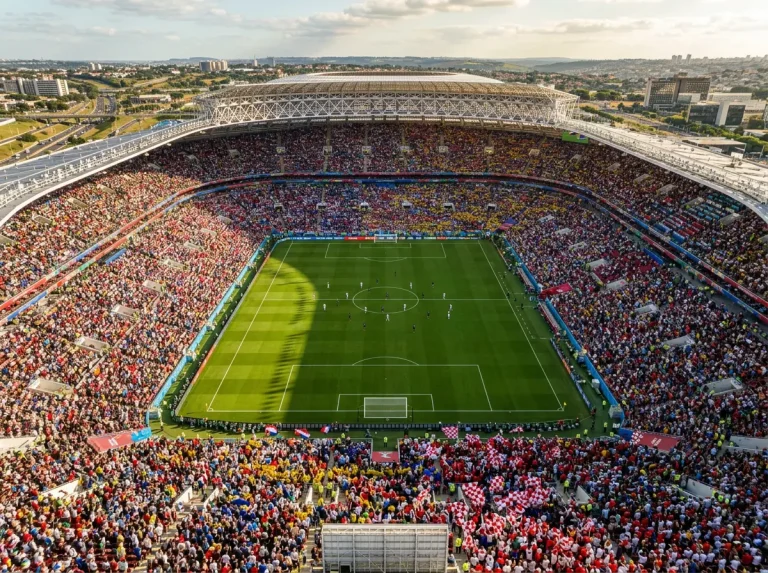

When FIFA announced the expansion to 48 teams, I assumed the group stage would become a formality — more matches, more blowouts, less drama. I was wrong. The new format creates genuine complexity that changes everything about how to approach group stage betting. Twelve groups of four teams, with the top two from each group plus eight best third-place finishers advancing to a Round of 32, means 32 of 48 teams progress. That's 67% qualification rate compared to 50% in the old format. The math alters strategy fundamentally.
Consider what this means for how teams approach their matches. In previous World Cups, a team needing to win its final group game to survive produced desperate, open football. Now, a draw might be enough to sneak through as a third-place qualifier. This incentivizes defensive setups in crucial matches, affecting over/under markets and moneyline value on underdogs. The complete group breakdown maps each pool's qualification scenarios, but the principle applies universally: expect more cagey football and fewer goal-laden finales than previous tournaments.
The 12 groups span three host nations across multiple time zones. Groups A through D feature matches primarily in Mexico and the eastern United States, with kickoffs ranging from 12:00 PM to 9:00 PM Eastern Time. Groups E through H play across central US venues, while Groups I through L utilize west coast stadiums with PT kickoffs that translate to late evening starts for eastern Canadian viewers. This scheduling matters for live betting — fatigue compounds when your sharp analysis happens at 2:00 AM local time.
| Group | Teams | Notable Matches |
|---|---|---|
| A | Mexico, South Korea, South Africa, Czechia | Opening match: Mexico vs South Africa |
| B | Canada, Bosnia and Herzegovina, Qatar, Switzerland | Canada's home fixtures |
| C | Brazil, Morocco, Haiti, Scotland | Brazil vs Morocco rematch |
| D | USA, Paraguay, Australia, Turkey | USA co-host matches |
| E | Germany, Curaçao, Côte d'Ivoire, Ecuador | Germany's post-Euro run |
| F | Netherlands, Japan, Sweden, Tunisia | Netherlands vs Japan |
| G | Belgium, Egypt, Iran, New Zealand | Golden generation finale |
| H | Spain, Cape Verde, Saudi Arabia, Uruguay | Spain vs Uruguay |
| I | France, Senegal, Iraq, Norway | Mbappé vs Haaland potential |
| J | Argentina, Algeria, Austria, Jordan | Defending champions |
| K | Portugal, DR Congo, Uzbekistan, Colombia | Portugal vs Colombia |
| L | England, Croatia, Ghana, Panama | 2018 semifinal rematch |
Several groups stand out for betting purposes. Group L's concentration of quality — England, Croatia, Ghana, and Panama — creates a genuine "group of death" where third place might not guarantee progression if other groups' third-place finishers accumulate more points. Contrast this with Group E, where Germany should cruise against Curaçao, Côte d'Ivoire, and Ecuador, making German group winner odds around 1.35 nearly unplayable from a value perspective.
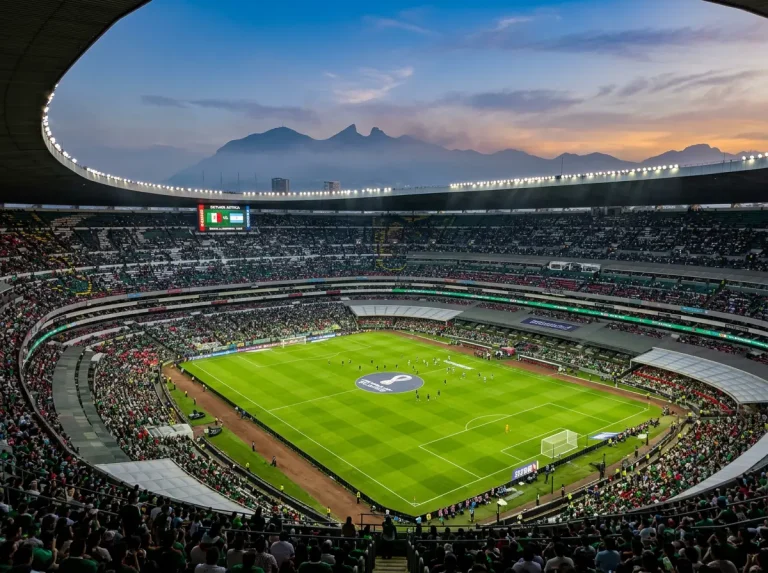
The host nation groups merit special attention. Group A features Mexico opening the entire tournament at Estadio Azteca against South Africa — the ceremonial significance creates emotional pressure that could affect first-match performance. Group B gives Canada all three matches on home soil, an advantage no World Cup host has enjoyed since 2002. Group D places the USA against Paraguay, Australia, and Turkey, a manageable draw that should see them progress comfortably.
For the detailed group stage predictions, I've analyzed each pool's qualification permutations. But the framework is consistent: identify groups where the favourite's odds are compressed by public perception, find third-place opportunities in competitive pools, and recognize where home advantage genuinely moves win probability versus where it's overpriced.
The 48-team format means the group stage runs 17 days — June 11 through June 27 — with up to eight matches played on peak days. In the old 32-team format, group stage lasted 12 days with maximum four matches daily. The concentrated scheduling creates opportunities for bettors who track squad rotation and fatigue accumulation.
Timing your group stage bets matters as much as selecting them. Odds shift substantially between the draw announcement and kickoff, typically compressing on favourites as public money flows in. The sharpest value often appears in the 48-72 hours after group draw, before sportsbooks adjust fully to public sentiment. By tournament eve, the lines are tight and edges scarce. If you're planning group winner or qualification bets, earlier typically beats later.
Canada in Group B — Home Soil Advantage

I was in the crowd at BMO Field when Canada qualified for Qatar 2022 — the first World Cup in 36 years. The atmosphere was unlike anything I'd experienced at a CONCACAF match: genuine belief, national unity, and the sense that something dormant had finally awakened. That belief translated poorly to results in Qatar, where Canada lost all three group matches despite competitive performances. Now, as co-hosts, they get something no Canadian squad has ever had: a World Cup tournament where every group match happens at home.
The comprehensive Canada betting analysis covers squad depth, tactical setup, and long-term odds. But for the hub overview, here's what matters most: Canada's Group B draw is workable, and home advantage creates genuine betting value that the market is only partially pricing in.
Canada's Match Schedule
All three Canadian group matches take place on home soil — an advantage that's difficult to overstate in tournament football. The schedule gives Canada optimal rest and preparation patterns:
| Date | Match | Venue | Kickoff (ET) |
|---|---|---|---|
| June 12, 2026 | Canada vs Bosnia and Herzegovina | BMO Field, Toronto | 3:00 PM |
| June 18, 2026 | Canada vs Qatar | BC Place, Vancouver | 6:00 PM |
| June 24, 2026 | Switzerland vs Canada | BC Place, Vancouver | 3:00 PM |
Six days between matches allows full recovery — critical for a squad that will play with maximum intensity in front of home supporters. The Toronto opener gives Canada the tournament's energy surge without the pressure of opening the entire World Cup (that honour goes to Mexico against South Africa on June 11). Moving to Vancouver for matches two and three creates different crowd dynamics but maintains the home advantage that visiting teams must overcome.
Bosnia and Herzegovina, Qatar, and Switzerland all face the logistical challenges of traveling across time zones, adapting to North American summer conditions, and playing in front of hostile crowds. Bosnia qualified through a grueling European playoff that included eliminating Italy on penalties — they'll carry emotional fatigue into Toronto. Qatar's 2022 hosting experience helps with tournament pressure, but they've never won a World Cup match outside Asia. Switzerland offers the toughest test: tournament-hardened, tactically flexible, and the slight group favourite by most odds assessments.
Key Players to Watch
Everything runs through Alphonso Davies, which makes his ACL recovery the single most important variable in Canada's World Cup campaign. The Bayern Munich star tore his anterior cruciate ligament in December 2025, and while recovery timelines for elite athletes have compressed substantially, returning to peak form within six months remains ambitious. As of April 2026, Davies is progressing well in rehabilitation and expected to be available for the tournament — but "available" and "at full capacity" are different propositions.
If Davies plays at 85% of his pre-injury ability, Canada has a genuine difference-maker whose pace and creativity can unlock any defence in the group. If he's limited to substitute appearances or protected minutes, Canada's attacking threat diminishes substantially. The betting markets will price this uncertainty in the weeks before kickoff, creating opportunities for those tracking his training sessions and fitness reports closely.
Jonathan David offers the goal-scoring threat that any World Cup campaign requires. The Lille striker has consistently produced in Ligue 1 and brings the clinical finishing that was missing in Qatar. If Davies creates the chances, David must convert them — the relationship between these two determines Canada's offensive ceiling.
Beyond the star names, watch for Tajon Buchanan's ability to stretch defences and the midfield presence of Stephen Eustáquio in controlling tempo. Canada's depth doesn't match European powers, but the starting eleven is genuinely competitive, and head coach Jesse Marsch has instilled a pressing identity that can disrupt superior technical sides.
How to Bet on Canada
The market currently prices Canada to win Group B at approximately 2.40, making them slight underdogs behind Switzerland at 2.10. This feels about right given Switzerland's tournament consistency, but the home advantage could justify pushing Canada toward favouritism. If you believe the home factor is undervalued, Canada at 2.40 offers positive expected value compared to what should be closer to 2.00 odds.
Canada to qualify from the group sits around 1.35 to 1.45 depending on the sportsbook — prohibitively short for single bets but potentially useful in parlays where you need high-probability legs. The third-place pathway makes qualification highly likely: even two draws and a loss could be enough depending on other group results.
Match-level betting offers clearer opportunities. The opener against Bosnia and Herzegovina should see Canada as favourites around 1.75 to 1.90, with the draw at roughly 3.40 and Bosnia victory around 4.50. If you believe in home advantage and a squad eager to avenge the Qatar disappointment, Canada's match odds in Game 1 represent the most actionable single bet.
Canada's most attractive betting angle isn't outright winner at 80.00 or even group winner at 2.40 — it's the June 12 opening match against Bosnia and Herzegovina. Home crowd, fresh squad, beatable opponent, and odds that don't yet reflect the emotional surge a World Cup home opener generates.
The Switzerland match on June 24 will likely determine the group winner, making it the market where late-stage betting opportunities emerge. If Canada beats Bosnia and Qatar convincingly, their odds to win that decisive match will compress. If results are mixed, Switzerland enters as favourite regardless of the table situation. Track the narrative, not just the standings.
Top 5 Contenders Worth Backing

Every World Cup cycle, someone asks me who I'm backing outright before the tournament starts. My answer is always the same: I'm not backing anyone outright until I've identified value, and value rarely lives with the obvious favourites. Argentina might be the best team in the world — they probably are — but at 5.50, you're laying odds that imply an 18% win probability. The actual historical win rate for tournament favourites hovers around 20%, so you're getting almost no edge for accepting all the variance of a five-week knockout tournament.
That said, some teams present compelling cases at their current prices. Here are five contenders I'm watching closely, ordered not by likelihood of winning but by the intersection of quality and odds value. The full team-by-team breakdown covers all 48 nations with betting profiles and market positioning.
France at 7.00 — The French squad might be the deepest in the tournament, and Kylian Mbappé has entered his prime years with something to prove after the Qatar final defeat. Les Bleus won in 2018, lost the final in 2022, and have the pieces to complete the arc. Group I offers no serious resistance — Senegal poses questions, but Iraq, Norway, and the path through the bracket looks navigable. At 7.00, France offers what I consider the tournament's best combination of ceiling and price.
Spain at 9.00 — Euro 2024 champions with a core that's now tournament-tested. Lamine Yamal turns 19 during the World Cup and has already demonstrated he performs on the biggest stages. Pedri, Rodri, and the midfield depth suggests a team that can control matches when others fatigue. Group H includes Uruguay, which is no pushover, but Spain's recent trajectory points upward. The 9.00 price underestimates their momentum.
Brazil at 9.00 — Here's where analysis gets uncomfortable. Brazil disappointed horribly in Qatar, losing to Croatia on penalties in the quarterfinals. The squad rebuild has been genuine: younger players, new coaching philosophy, diminished reliance on Neymar-era stars. I'm uncertain whether they've rebuilt enough, but 9.00 for a nation that reaches at least the quarterfinals in virtually every World Cup represents historical value. Morocco awaits in Group C — the 2022 semifinalists won't make the group stage easy — but Brazil's floor remains higher than most nations' ceilings.
England at 8.00 — The eternal nearly-men, except their squad quality genuinely warrants shorter odds than this. Jude Bellingham has become a superstar since Qatar. Bukayo Saka, Phil Foden, and the attacking depth exceeds any previous "golden generation" claim. The problem is always the knockout rounds, where England finds ways to lose matches they should win. Group L with Croatia creates an early test, but if they navigate that, the bracket opens. At 8.00, you're betting on talent finally overcoming tournament psychology.
Portugal at 15.00 — The post-Ronaldo transition has been smoother than expected. Whether Cristiano Ronaldo appears in the squad at age 41 remains uncertain, but the team has demonstrated it can function without depending on him. Rafael Leão, João Félix, and Bruno Fernandes provide attacking quality, while the defence has stabilized under new management. Group K includes Colombia, making qualification less certain than odds suggest, but 15.00 on a team capable of beating anyone on their day offers genuine longshot value.
These five nations represent different risk profiles: France as the safer value play, Portugal as the higher-variance longshot. Your bankroll allocation should reflect which end of that spectrum suits your approach — and whether you're comfortable having money locked for five weeks awaiting results.
World Cup Bet Types That Work
Not every bet type suits tournament football equally. I've placed enough losing parlays on "obvious" group stage results to know that complexity doesn't equal sophistication. The bet types that actually work at the World Cup share a common feature: they account for the low sample size and high variance inherent in knockout tournaments. Let me break down which markets deserve your attention and which deserve skepticism.
Moneyline (Match Result) remains the foundation. You're betting on one team to win or the match to draw in regulation time. Simple, transparent, and the market where sportsbooks compete most aggressively on odds. World Cup matches involving mismatched sides — say, France against Iraq — offer moneyline value only if you believe the favourite is underpriced, which rarely happens when public money floods in. Competitive group matches and knockout rounds offer better moneyline opportunities.
Over/Under Goals performs differently at World Cups than in domestic leagues. Tournament football tends toward caution: teams fear elimination, managers prioritize not losing, and the psychological weight of the occasion suppresses the open, attacking play you see in league fixtures. The standard 2.5 goal line often favours unders in knockout rounds, though group stage matches between top nations and tournament debutants can produce high-scoring results. Tracking historical World Cup goal averages helps calibrate expectations.
Asian Handicaps eliminate the draw outcome by applying fractional goal advantages to one team. A -1.5 handicap on Argentina means they must win by two or more goals for the bet to pay. This market works well when you have conviction about margin of victory — when you believe a mismatch is more severe than the moneyline suggests. The complexity deters casual bettors, which sometimes creates value for those comfortable with the mechanics.
Parlays (Accumulators) should be approached with extreme caution at the World Cup. The appeal is obvious: combine three "sure things" at short odds to create a meaningful return. The problem is equally obvious: nothing at a World Cup is a sure thing. Saudi Arabia beat Argentina in Group G at Qatar 2022 at roughly 20.00 odds. Japan beat Germany and Spain. Every parlay containing those favourites lost. If you must build parlays, limit legs to two or three and include at least one underdog or draw — not as a hedge, but because those outcomes happen more often than odds suggest.
Proposition Bets offer the most creative betting opportunities but require specific knowledge that's hard to acquire. Betting on a player to score first in a match demands understanding of team tactics, penalty-kick hierarchy, and historical scoring patterns. Betting on total corners or cards requires analysis of referee tendencies and team playing styles. These markets carry higher margins, meaning you need a larger edge to overcome the bookmaker's cut. The complete bet types breakdown, including worked examples of each market, goes substantially deeper into when and how to use each option.
Asian Handicap — A handicap betting system that eliminates the draw by giving one team a fractional goal advantage. If you bet Argentina -0.5 against Saudi Arabia, Argentina must win (by any margin) for your bet to succeed. The half-goal ensures there's always a winner.
Where to Bet in Canada — Legal Options
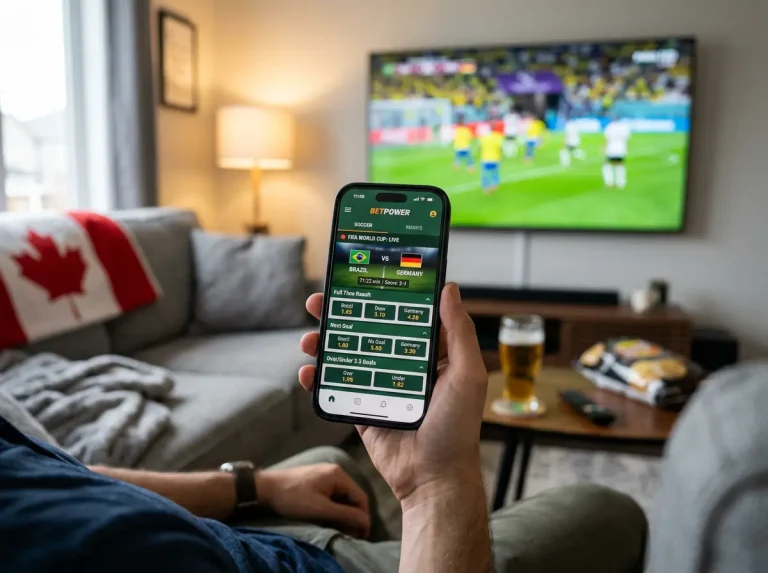

Before August 2021, legal single-event sports betting in Canada meant either traveling to a casino with a sportsbook window or using quasi-legal offshore sites that operated in regulatory grey zones. Bill C-218 changed everything, decriminalizing single-event betting and giving provinces authority to regulate their own markets. The result is a patchwork system where your province of residence determines your options — and Ontario got dramatically more options than everywhere else.
Ontario operates the only open market in Canada, licensing private sportsbook operators through iGaming Ontario and regulated by the Alcohol and Gaming Commission of Ontario (AGCO). Dozens of operators compete for Ontario bettors, which means competitive odds, aggressive welcome offers, and the full range of World Cup betting markets. If you're an Ontario resident, you have access to the same operators that serve major betting markets globally. The Canadian sportsbook comparison evaluates which platforms offer the best World Cup coverage, odds quality, and mobile experience.
British Columbia residents access legal betting through PlayNow, operated by BCLC (British Columbia Lottery Corporation). PlayNow offers comprehensive World Cup coverage but without the competitive pressure that pushes Ontario operators to sharpen their lines. Odds may be marginally worse, market selection slightly narrower, and promotional offers less generous. Quebec's equivalent is Mise-o-jeu through Loto-Québec, operating under similar provincial monopoly conditions.
Alberta operates Play Alberta as its provincial platform, though the province has signalled movement toward opening a private market potentially before the 2026 World Cup. If that timeline accelerates, Alberta residents may gain Ontario-style access by tournament kickoff. Saskatchewan, Manitoba, and other provinces each have their own lottery-corporation-operated platforms with varying levels of sports betting sophistication.
The practical implication: Ontario bettors should shop lines across multiple operators for the best World Cup odds. Bettors elsewhere should use their provincial platform while recognizing the trade-offs in odds quality. Using unlicensed offshore sportsbooks remains technically possible — Canada doesn't criminalize individual bettors — but offers no consumer protections, creates potential banking complications, and may violate provincial regulations even if criminal enforcement is rare.
Whatever platform you choose, confirm it's properly licensed before depositing funds. For World Cup 2026 specifically, look for operators offering the full range of tournament markets: outrights, group betting, match markets, and player propositions. A platform strong on NHL might not have invested equally in soccer coverage, and you'll feel the limitations when markets you want simply don't exist.
World Cup 2026 Betting Questions Answered
Is sports betting legal in Canada for the 2026 World Cup?
Yes. Single-event sports betting became legal federally in August 2021 with the passage of Bill C-218. Each province regulates its own market. Ontario allows licensed private operators through iGaming Ontario. Other provinces operate through lottery-corporation platforms like PlayNow (BC), Mise-o-jeu (Quebec), and Play Alberta. You must be 19 or older to bet legally in most provinces (18 in Alberta, Manitoba, and Quebec).
When does World Cup 2026 start, and how long does it run?
The tournament runs June 11 through July 19, 2026 — a span of 39 days. The opening match features Mexico against South Africa at Estadio Azteca in Mexico City. The group stage continues through June 27, followed by the Round of 32, Round of 16, quarterfinals, semifinals, and the final at MetLife Stadium in East Rutherford, New Jersey. Canada's first match is June 12 against Bosnia and Herzegovina in Toronto.
How many teams qualify for the 2026 World Cup?
48 teams compete in the expanded format — up from 32 in previous tournaments. The 12 groups of four each produce two automatic qualifiers plus the eight best third-place finishers, meaning 32 teams advance to the knockout round. This 67% advancement rate changes tactical dynamics, as teams can qualify with more conservative approaches than previous formats required.
What odds format do Canadian sportsbooks use?
Decimal odds are the default on most Canadian platforms. A price of 2.50 means your total return on a $100 bet is $250 (your original stake plus $150 profit). American odds and fractional odds are available on some platforms, but decimal is most common and easiest to calculate returns: simply multiply your stake by the decimal odds. Implied probability equals 1 divided by the decimal odds — so 2.50 implies a 40% chance.
Can I bet on Canada to win the World Cup?
Yes. Canada's outright winner odds sit around 80.00 as of April 2026, implying roughly a 1.25% win probability. While this represents a longshot bet, it's not a wasted ticket — Canada plays all group stage matches at home, faces a manageable group, and could benefit from bracket fortune in the knockout rounds. More realistic betting angles include Canada to win Group B (approximately 2.40) or Canada to qualify from the group (approximately 1.40).
What's the best time to place World Cup bets?
Pre-tournament markets — outrights, group winners, top scorer — typically offer the best value weeks or months before kickoff, when uncertainty is highest and odds are most generous. Once the tournament starts, match-specific odds tighten as kickoff approaches due to lineup confirmations and public betting volume. Live betting during matches can offer value when in-game developments create odds shifts the market overreacts to, but requires quick decision-making and reliable streaming access.
How is the World Cup 2026 format different from previous tournaments?
The 48-team format uses 12 groups of four instead of eight groups of four. Two teams from each group qualify automatically, plus the eight best third-place finishers, creating a Round of 32 before the traditional Round of 16. This means 104 total matches compared to 64 previously, a longer tournament duration (39 days vs. 29), and different strategic considerations as teams can advance with fewer points than in the 32-team format.
